
 EN
 ar
 bg
 hr
 cs
 da
 nl
 fi
 fr
 de
 el
 hi
 it
 ko
 no
 pl
 pt
 ro
 ru
 es
 sv
 tl
 iw
 id
 lv
 lt
 sr
 sk
 sl
 uk
 vi
 et
 hu
 th
 tr
 fa
 ms
 hy
 ka
 ur
 bn
 mn
 ta
 kk
 uz
 ku

Intelligent Weir Flow Meter
For long-term reliability, Kingmach Intelligent Weir Flow Meter requires maintenance and verification planning. A weir point can remain accurate only if the hydraulic control remains clean and the water head reading remains tied to the correct reference. Routine inspection should check debris, sediment, crest damage, enclosure condition, cable safety, and whether the water surface behaves normally near the measuring section. Verification should be easier if the project file contains photographs, installation notes, and the original site purpose. This kind of description helps buyers understand the full responsibility of flow monitoring. The device provides the measurement path, but the owner keeps the channel condition and data interpretation healthy. A practical review also checks whether the measuring section remained clean and hydraulically stable. Sediment, debris, vegetation, downstream backwater, or a disturbed approach can change the meaning of the same water-head reading, so those conditions belong in the project notes. For long-term operation, the point name, flow direction, channel purpose, cleaning history, and first stable value should remain visible. Those details help a new operator understand why the point exists and how the data should be used after handover. During abnormal events, the team should compare the flow record with rainfall, upstream control, pumping, seepage, inspection findings, and maintenance work. That comparison helps separate normal water response from blockage, measurement disturbance, or a change in the water system.
Application of Intelligent Weir Flow Meter
Water conservancy projects use Kingmach Intelligent Weir Flow Meter to observe controlled flow through small structures, channels, test sections, and auxiliary discharge points. The measurement is useful when operators need a continuous record rather than occasional visual checks. A weir point can show how flow changes after rainfall, gate operation, upstream storage variation, or maintenance work. The application should be planned around the water path: approach condition, weir crest, water head reference, downstream influence, and cleaning access. Data should be reviewed with reservoir level, rainfall, gate records, seepage notes, and field inspection. If the flow curve changes suddenly, the team should check both the water condition and the measuring section. This approach helps water conservancy teams use flow monitoring as part of operation, maintenance, and safety review rather than a separate instrument reading. In these projects, the flow point may support canal regulation, spillway observation, auxiliary drainage, or small test structures. The record is strongest when it is linked to the purpose of the channel. Operators can compare the trend with gate timing, upstream water level, and inspection notes, then decide whether the change reflects normal operation, a blockage, or a field condition that needs direct confirmation. This keeps operational review connected to hydraulic reality.
The future of Intelligent Weir Flow Meter
Remote monitoring will become more important for Kingmach Intelligent Weir Flow Meter because many flow points are placed in channels, tunnels, drainage outlets, rural irrigation areas, or hydraulic structures that are not checked every day. A remote record can show night flow, storm peaks, delayed discharge, and gradual blockage patterns. Future systems should also show station health, last maintenance, data gaps, and whether the point needs field cleaning. This helps teams know when the record is trustworthy and when the site requires a visit. Remote flow monitoring works best when it reports both water behavior and the condition of the measuring point. Future platforms should make field visits more focused. Instead of sending staff only because a curve looks unusual, the system can show whether the change follows rain, a planned pump event, or a known cleaning activity. That context helps teams decide whether to inspect immediately, wait for confirmation, or review a nearby station first. Remote monitoring becomes more practical when it reduces uncertainty, not when it simply produces more alarms.
Care & Maintenance of Intelligent Weir Flow Meter
Calibration and verification for Kingmach Intelligent Weir Flow Meter should be treated as part of operation. The team should compare the flow record with visible site behavior, maintenance notes, and any manual checks used by the project. Verification does not always require a complex procedure; sometimes it means confirming that water passes the crest cleanly and that the recorded trend matches the observed condition. If a repair, cleaning, or channel modification occurs, a post-work check should be saved. This keeps the measurement defensible when flow data is used for reports, water accounting, or operating decisions. Verification notes should record who checked the point, what reference was used, whether the channel was stable, and whether unusual weather or upstream activity affected the reading. A dated note beside the data curve is often more useful than a vague pass or fail mark. It helps reviewers understand the field condition before comparing monthly totals or investigating a sudden shift.
Kingmach Intelligent Weir Flow Meter
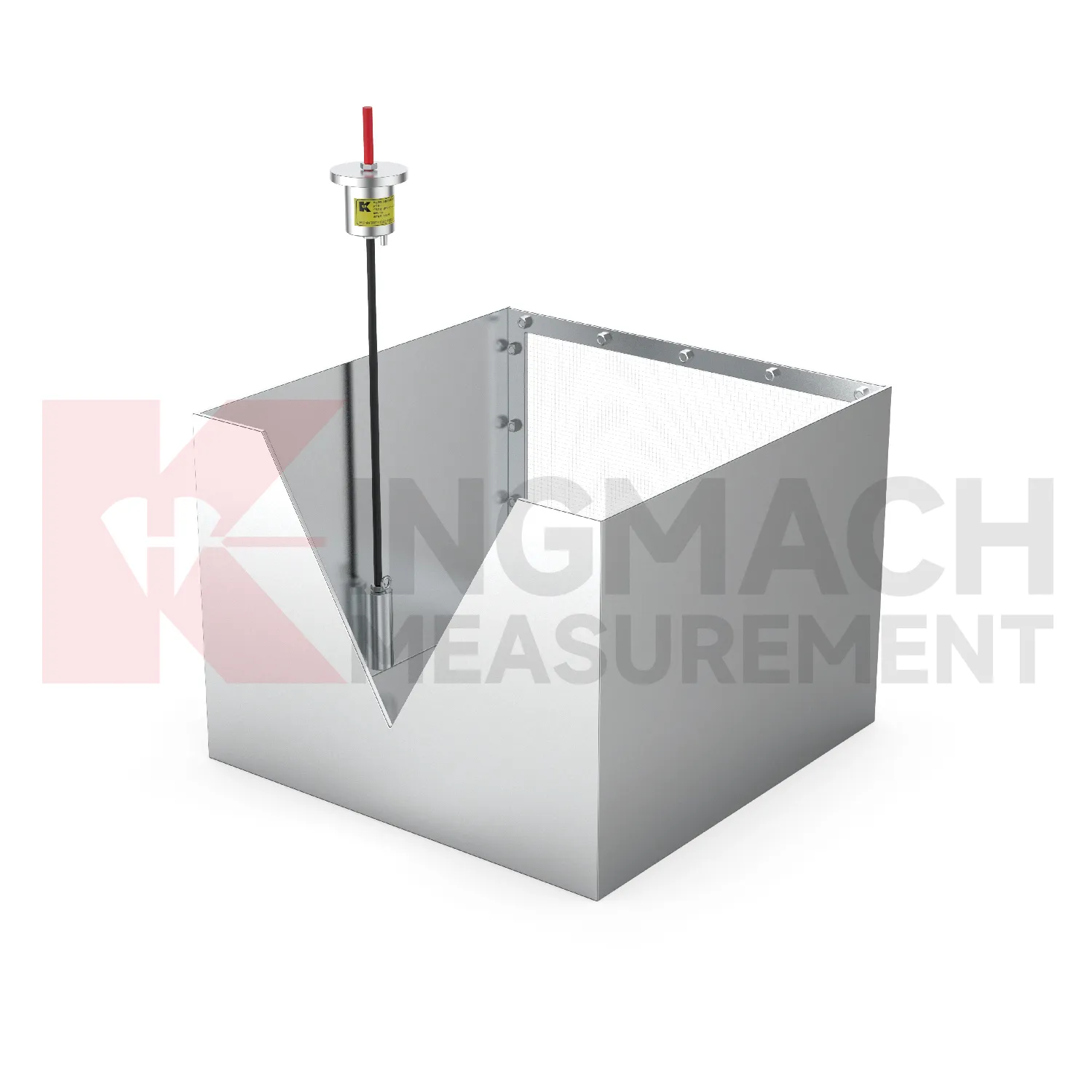
Kingmach Intelligent Weir Flow Meter explains the relationship between water head and flow without turning the page into a hydraulic formula sheet. The key idea is simple: the weir creates a known control section, and the water level at that section gives a basis for calculating discharge. Site conditions decide whether the record is trustworthy. Turbulence, sediment, floating debris, poor leveling, backwater, or a disturbed approach channel can weaken the measurement. The product information directs attention to those practical concerns and shows that accurate flow monitoring depends on both instrument capability and channel discipline. For water accounting or resource management, the same section, reference point, and maintenance discipline make seasonal and operational comparison reliable. If the channel is modified, the record should not hide the change. A repair, new crest, cleaned approach, moved enclosure, or changed data channel can affect comparability and should be visible beside the next flow trend. This keeps the buyer focused on field performance, not isolated readings.
FAQ
Q: What maintenance is needed?
A: Inspect the crest, approach channel, downstream condition, sensing area, enclosure, cable route, labels, and recent flow trend.
Q: How often should cleaning happen?
A: Cleaning frequency depends on debris, sediment, season, upstream activity, rainfall, and how critical the flow record is for the project.
Q: What should be checked after storms?
A: Check debris, sediment, water marks, downstream backwater, enclosure water entry, cable damage, and whether the first post-storm reading is plausible.
Q: Why record maintenance notes?
A: Maintenance notes explain whether a flow change came from real water behavior, cleaning, repair, blockage, or measuring-section disturbance.
Q: What if the weir point is modified?
A: Record the date, reason, old condition, new condition, and first stable reading so future reviewers can compare the curve correctly. Designers, operators, maintenance staff, and owners may read the same curve, so the record needs clear site conditions, inspection notes, and action history in plain engineering language.
Reviews
David Wilson
We purchased displacement transducers and settlement sensors, and the quality exceeded our expectations. Easy installation and reliable performance.
Christopher Martinez
Very satisfied with the readouts & data loggers. User-friendly interface and supports multiple sensor inputs.
Latest Inquiries
To protect the privacy of our buyers, only public service email domains like Gmail, Yahoo, and MSN will be displayed. Additionally, only a limited portion of the inquiry content will be shown.
Charlotte***@gmail.comUnited Arab Emirates
Hi, we require instrumentation cables suitable for harsh environments. Could you advise on specifica...
Harper***@gmail.comIndia
Dear Sir, we are planning to procure a complete monitoring system including strain gauges, tiltmeter...
Related product categories
- Intelligent Weir Flow Meter
- Smart Weir Flow Meter
- weir flow meter
- weir type flow meter
- weir flow meter Price
- weir flow meter Manufacturer
- weir flow meter Supplier
- weir flow meter Solution
- weir flow meter System Integration
- weir flow meter Localization
- weir flow meter Domestic Manufacturing
- weir flow meter China